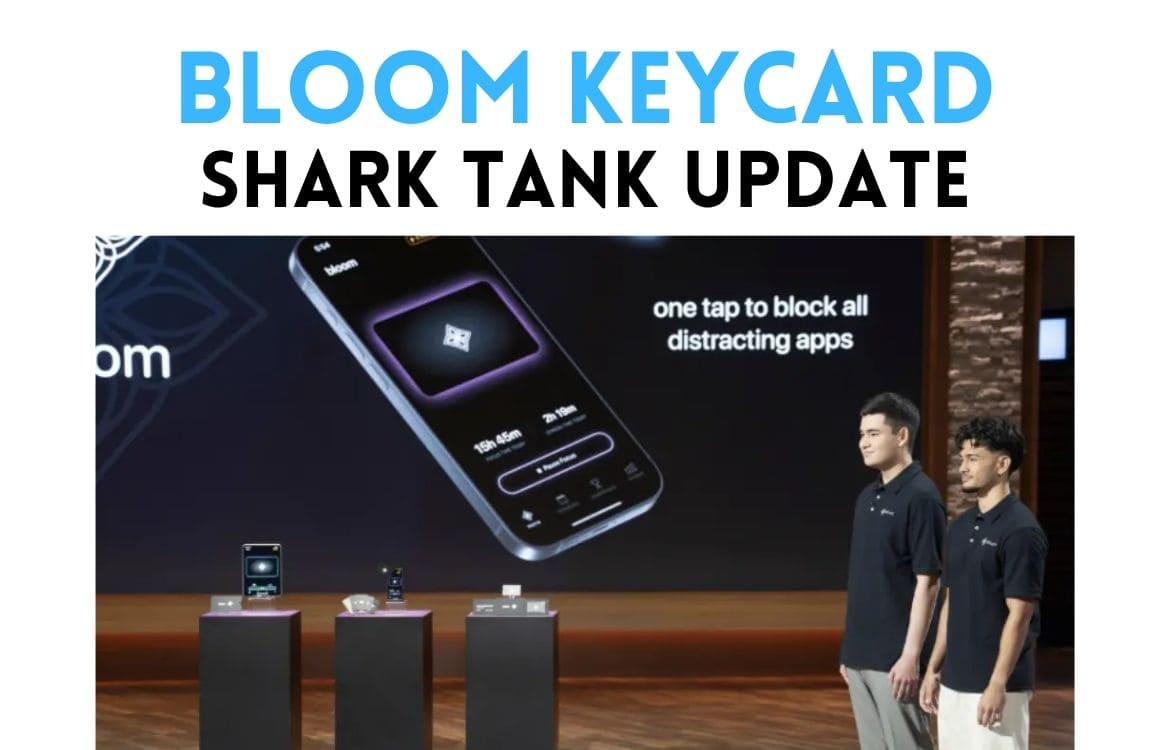
As today’s era is a digital world, phone addiction has become one of the major struggles, especially among the younger generation. So it becomes difficult for them to stay focused. There are a lot of options that distract them, like social media, games, and constant notifications, which make it difficult to focus on their work. This also causes mental fatigue and decreased productivity.
Identifying this problem, Giancarlo Novelli and Danny Chmayetelli decided to create an innovative solution that is different from traditional screen time apps. The founders were students at UCLA, which is why they know this frustrating problem very well. They realized that even though smartphones also give notifications for the screen time limit, users easily ignore or bypass them.
They created an innovative solution called Bloom, a system that connects a mobile app with a physical card, which is known as the Bloom card. It’s different from other screen lock apps; Bloom users need a Bloom card to unlock the blocked apps. This extra feature helps users to build discipline and stay focused.
They appeared on Shark Tank seeking $75,000 for 5% equity. They hoped to grow their business and reach a wider audience who are struggling with screen time.
In this article, we will discuss their sales, profit, scalability, and margin rate. Did they get the deal or not?
Bloom Net Worth 2026
Giancarlo Novelli and Danny Chmayetelli went on Shark Tank asking for $75,000 for 5% of their company. This meant they valued Bloom at about $1.5 million. They secured a deal with Daniel Lubetzky for $75,000 for 20% equity after negotiation, which brought the company’s valuation down to about $375,000 at the time of the deal. Based on its strong early sales, viral concept, high-margin digital + hardware model, and growing demand for focus and productivity tools, Bloom has shown strong growth potential. With increasing awareness about screen addiction and continued app adoption, Bloom’s estimated net worth in 2026 is around $1 million to $2 million.
Did Bloom Get a Deal on Shark Tank?
Yes, they secured the deal with Daniel Lubetzky. At the start, they were asking $75,000 for 5% equity. But their company was a startup, so the Sharks were concerned about it.
They got two deals, one from Kevin O’Leary, who offered them $75,000 for 33.3%, which was significantly higher than their initial ask.
The other offer they got from Daniel Lubetzky was $75,000 for 25% equity, and after doing a healthy negotiation, they locked the deal with Daniel for 20%.
They mentioned that it is different from traditional apps because it came up with the physical card.
Bloom Shark Tank Deal Table
| Sharks Name | Offer & Demand | Accepted |
| Kevin O’Leary | $75,000 for 33.3% equity | No |
| Rashaun Williams | Out | No |
| Kendra Scott | Out | No |
| Lori Greiner | Out | No |
| Daniel Lubetzky | $75000 for 20% equity | Yes |
Founders’ Backstory
Giancarlo and Danny are college students struggling with phone addiction. Like other students, they also wasted their time scrolling on devices instead of focusing on studies and productive activities. After feeling frustrated with this habit, they were using traditional lock apps but realized that they were not as effective as they wanted them to be because users could easily bypass the restriction in these apps.
This is where a long-term solution came to them, which is Bloom, which required a physical card, making it much harder to cheat. At the beginning, they designed that device for personal use only, but after realizing that millions of people were suffering from the same problem, they decided to transform their idea into a business opportunity. They invested their savings into Bloom; their journey is a reflection of determination, innovation, and the urge to solve a real problem.
Bloom Shark Tank Pitch
Giancarlo and Danny entered the Shark Tank and started their pitch by highlighting the growing problem of screen addiction. They mentioned how constant notifications make it difficult for users to stay focused. Then they introduced their device, which connects both hardware and software because it came up with a physical card.
They allowed their users to block apps and activate Focus Mode. Once they activate the Focus Mode, users can’t access their apps without the Bloom card. This made it difficult for users to cheat.
The founders also explained that the manufacturing cost of the Bloom card is $2.77, and they sold it for $39 through their official website. This huge margin impressed the Sharks.
Shark Questions & Discussion
The Sharks asked several questions so they could analyze the product deeply.
Lori Greiner was concerned about the usability. She mentioned what would happen if the users lost their Bloom card. Giancarlo and Danny replied confidently that they assured 3 emergency unlock features for their users.
Kevin O’Leary asked about the uniqueness of the device and compared it with mobile features. They replied that the Bloom was designed by focusing on human nature.
The discussion was all about margin, pricing, and marketing strategies. The founders mentioned that they are using Meta Ads for the marketing of their device.
Sharks Negotiation and Reaction
Sharks really liked the product and wanted to invest in it, but were concerned about the growing phase and competition. They impressed the Sharks with their sales. They mentioned that Bloom earned $220,000 within six months of the launch, and the profit rate was $60,000.
They mentioned that the customer acquisition cost was $27, and they sold the product for $39. Even though the manufacturing cost for the product was $2.77, the margin was really impressive.
Although their product has a high margin rate, they were still not able to convince all the Sharks.
They got two offers from the Sharks: Kevin offered them $75,000 for 33.3% equity, while Daniel offered them $75,000 for 25% equity, which changed into 20% after negotiation.
Why Some Sharks Said No
Sharks said no to the deal for several reasons and concerns:
Kendra Scott said no to investment because she mentioned that it’s too early for her to invest.
William mentioned that I will be the customer, but not the investor. Other Sharks were also concerned about the competition with smartphones.
After all these concerns, they still got the offer from two Sharks and locked the deal with Daniel for 20% equity.
Bloom Shark Tank Update 2026
As of 2026, Bloom is still growing after its Shark Tank appearance and continues to attract attention as a smart solution for phone addiction. The founders focused on improving their app and Bloom card system to help users reduce screen time and stay more focused in daily life. After securing a deal with Daniel Lubetzky, the company gained strong support for scaling and marketing. The brand is expanding its user base, especially among students and young professionals who struggle with distractions from social media and apps. With strong early sales, high margins, and a unique mix of physical and digital control, Bloom is steadily building its position in the productivity and wellness space. In 2026, the company continues to refine its product and grow through online marketing and user feedback.
Product Features & Availability
The product has unique features like a stainless steel card that connects with a mobile app. Users can also choose which apps to block and activate Focus Mode. This product was designed by focusing on human behavior.
Bloom is different from other traditional smartphone apps. It blocks the apps by activating Focus Mode, and you can’t access the app until you tap the card again.
Customers can buy it from their official website for $39 and get updates from their Instagram account.
What Happened To Bloom After Shark Tank?
After they appeared on Shark Tank, their product gained global recognition. This significantly increased sales and brand awareness. With the help of investment and mentorship, their company gained huge support and came up with innovative ideas for the future because they want to solve the growing problem. Bloom is the long-term solution.
Conclusion
Bloom’s journey started from a personal struggle and turned into a successful business opportunity. The founders recognized the real-world problem of phone distraction and came up with the idea by focusing on human behavior, not just introducing new technology to the market.
Their appearance on Shark Tank helped them gain visibility, investment, and mentorship, which is beneficial for them. Even though this product is designed for youngsters, it also introduces parental control features for children.
With their passion, potential, and hard work, their future looks promising.

Hi, I’m Sandiya Kanwal! I’m in my final semester of my bachelor’s degree and I have a strong passion for sharing the inspiring stories of entrepreneurs. Writing for SharkTankInsights.com helps me explore how creative people turn simple ideas into successful businesses. I enjoy learning from their challenges, strategies, and achievements, and I love inspiring readers who dream of building something great.