
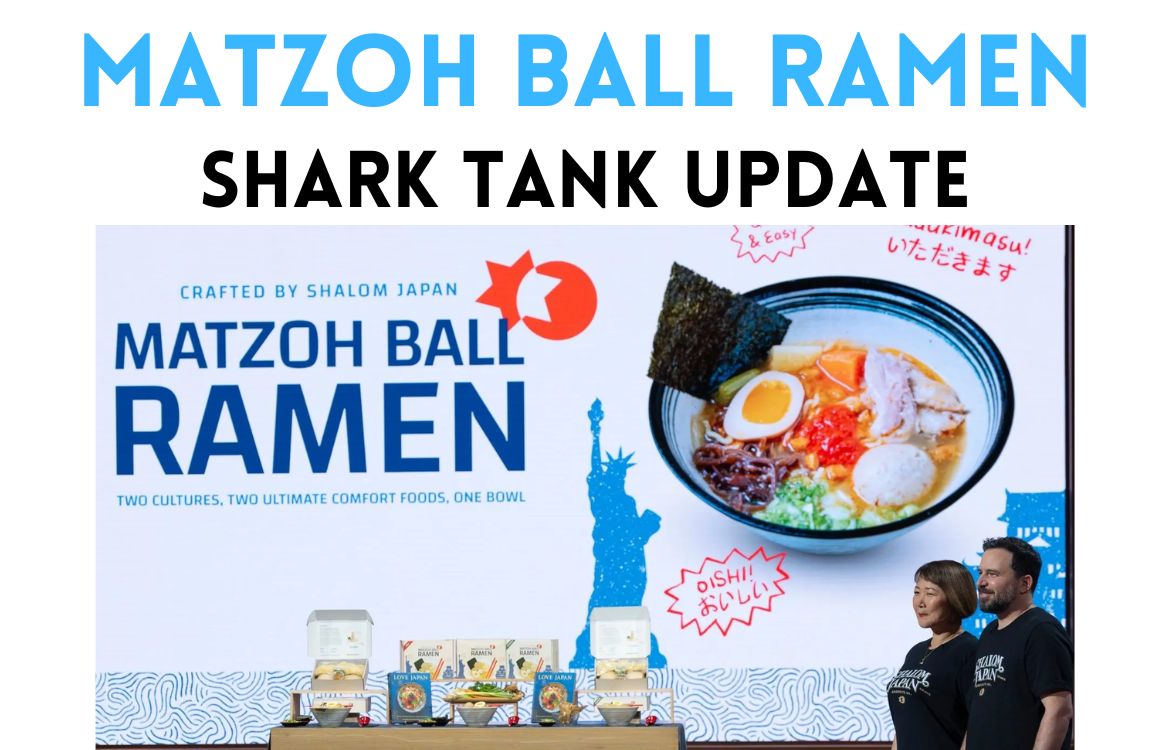
New innovation sometimes lies when two traditions and creativity are combined. The same happens in the case of Matzoh Ball Ramen. This recipe is innovative by Aaron Israel and Sawako Okochi, adding a unique twist to the comfort food of Ramen.
The founders mention that while ramen is globally popular and matzoh balls are a staple in Jewish cuisine, they combined the two to create a flavorful, hearty, and convenient meal.
This product has rich, flavorful broth, which is paired with tender Matzoh balls. This combined food is used for both adventure lovers and comfort food lovers . On Shark Tank Season 17, Aaron and Sawako pitched their business, reportedly asking for $200,000 for 20% equity, but eventually accepted a deal for $200,000 for 30% equity.
The founders’ purpose was to show their product on the International platform to expand its distribution and production scale. The Sharks were really impressed with the broth and taste of the food.
Matzoh Ball Ramen Net Worth Shark Tank Update
Aaron Israel and Sawako Okochi went on Shark Tank asking for $200,000 for 20% of their company. This meant they thought their business was worth $1 million. They made a deal with Lori Greiner for $200,000 in exchange for 30% of the company. That deal lowered the value of the company to about $666,000. Matzoh Ball Ramen became very popular after the show and saw strong retail interest, new flavor launches, and media attention for its unique cultural fusion. The episode was aired in 2025, so using their growing distribution and loyal customer base, the current net worth of Matzoh Ball Ramen is estimated to be around $1 million to $1.3 million in 2025.
Did Matzoh Ball Ramen Get a Deal on Shark Tank?
Yes, Matzoh Ball Ramen secured a deal on Shark Tank, accepting $200,000 for 30% equity, even though they asked for 20% equity.
| Shark Name | Offer & Demand | Accepted |
| Lori Greiner | $200,000 for 30% equity | yes |
| Mark Cuban | out | no |
| Kevin O’Leary | out | no |
| Daymond John | out | no |
| Barbara Corcoran | out | no |
The deal provided Aaron and Sawakoasis guidance and Shark support to grow the brand and expand into broader markets.
Matzoh Ball Ramen Shark Tank Pitch
Founders’ Backstory
Aaron Israel and Sawako Okochi are entrepreneurs who really like to blend flavours of food from different traditions. Aaron is a Jewish cuisine lover and really enjoys Jewish food, while on the other hand, Sawako grew up in Japan and really loves Asian food. When they come together, they form food that fuses both traditional flavours and innovative concepts.
They partnered to create Matzoh Ball Ramen, aiming to combine the amazing flavor of matzoh balls with the bold flavor of ramen. Their mission was clear: they wanted to deliver a unique, flavorful, and convenient meal that bridges cultures and satisfies a wide audience.
Before they come on Shark Tank, they conduct testing sessions and market research, and they take their food and taste from food enthusiasts and Chefs. They did not want that fused food to just taste good but they wanted customers to like it and want to buy it.
Initial Pitch
Aaron and Sawako entered the Tank carrying a steaming bowl of Matzoh Ball Ramen, which immediately attracted Sharks from its Aroma and presentation. They highlighted the product’s advantages
- Fusion of traditional matzoh balls and modern ramen.
- Made with high-quality, fresh ingredients.
- Packaged for both store and ready-to-eat consumption.
- Mentioned an underserved market of comfort food enthusiasts
Aaron explained that matzoh balls cook at low speed and ramen is quickly available but lacks the unique texture and nostalgia of matzoh. And together they make a product which is easily cooked, comforting, and exciting
Memorable lines during the presentation get everyone’s attention
“We took two classics and made something entirely new, a bowl that feels like home but excites your taste buds.”
At that point Sharks really impressed and saw the potential of a product that really stands out from the food market.
Shark Questions & Discussion
Mark Cuban focused on scalability:
“How quickly can you produce and ship nationwide?”
Aaron and Sawako explained that their small production line could handle initial demand, but to scale up to major retailers, they would require investment
Kevin O’Leary questioned profitability:
“What’s the cost per unit versus retail price?”
The founder shared that the production cost is at a healthy margin at $8 -12 per serving but O’Leary wants a healthy and clear understanding between shell life and long-term profitability.
Daymond John asked
“Who will buy this, and will they pay for a fusion product?”
Aaron and Sawako noted that millennials, foodies, and comfort food enthusiasts are increasingly drawn to innovative fusion meals, especially products with nostalgic or cultural ties.
Barbara Corcoran praised the creativity and presentation but expressed concern about competing in the ready-to-eat market.
Sharks’ Reactions and Negotiations
Lori Greiner immediately recognized the retail potential for Matzoh Ball Ramen and really valued its uniqueness. After negotiation, Lori reportedly offered $200,000 for 30% equity, which Aaron and Sawako accepted. This day is not just about the investment; it is about the Lori mentorship, through which they can increase their production rate and access to the major retailer.
The reason why other Sharks pass the product
Mark Cuban was concerned about scaling logistics
Kevin O’Leary was cautious about margins and shelf life
Daymond John was hesitant about the niche
Barbara Corcoran was intrigued but decided not to invest
This deal is not only about investment; it also gives the Founders the guidance to expand their business internationally.
Product Availability & Features
Matzoh Ball Ramen offers:
Fusion of matzoh balls and ramen in a convenient, ready-to-eat format. The ingredients are fresh and of high quality. and the packaging is for retired restaurant and ready-to-eat consumers. And its flavour is so unique, which is appealing to adventurous food lovers and comfort food lovers.
This product is ordered online and in food stores, which are famous for food specialties, and through a partnership with restaurants and after they come from Shark Tank, they increase the production rate with Lori’s help, approach major retailers and expand their business.
What Happened After Shark Tank
After the Shark Tank deal, Matzoh Ball Ramen:
The viewers were really impressed by the product and curious about the taste of the food. And they save their partnership with food service providers and grocery stores. and continuously introduce new flavours and build loyalty between customers, both online and offline. In 2025, the brand continuously grew after the Shark Tank episode and solidified its position as a unique fusion of two traditions and cultures.
Conclusion
Matzoh Ball Ramen explains how creativity, culinary skill, and entrepreneurship can turn into a niche in a competitive food market.
Founders Aaron Israel and Sawako Okochi, through their business product convert, combine tradition with Innovation and create a food that is acceptable to adventure lovers and comfort food lovers.
On Shark Tank, the company reportedly accepted a deal with Lori Greiner for $200,000 in exchange for 30% equity, even though the initial ask was 20% equity.
Through Shark Tank, they increase their production, access to major retailers and innovate new flavours in their business.

Hi, I’m Sandiya Kanwal! I’m in my final semester of my bachelor’s degree and I have a strong passion for sharing the inspiring stories of entrepreneurs. Writing for SharkTankInsights.com helps me explore how creative people turn simple ideas into successful businesses. I enjoy learning from their challenges, strategies, and achievements, and I love inspiring readers who dream of building something great.


