John Paul DeJoria entered Shark Tank Season 5 as a guest Shark with decades of business experience behind him. He was already popular for building John Paul Mitchell Systems and Patrón Tequila before sitting with the Sharks. Therefore, John Paul came into the Tank with something different to offer entrepreneurs building consumer businesses.
However, John Paul did not remain on Shark Tank long enough to build a large portfolio. He made only one accepted investment during his complete Shark Tank journey. The lucky company was Tree-T-Pee.
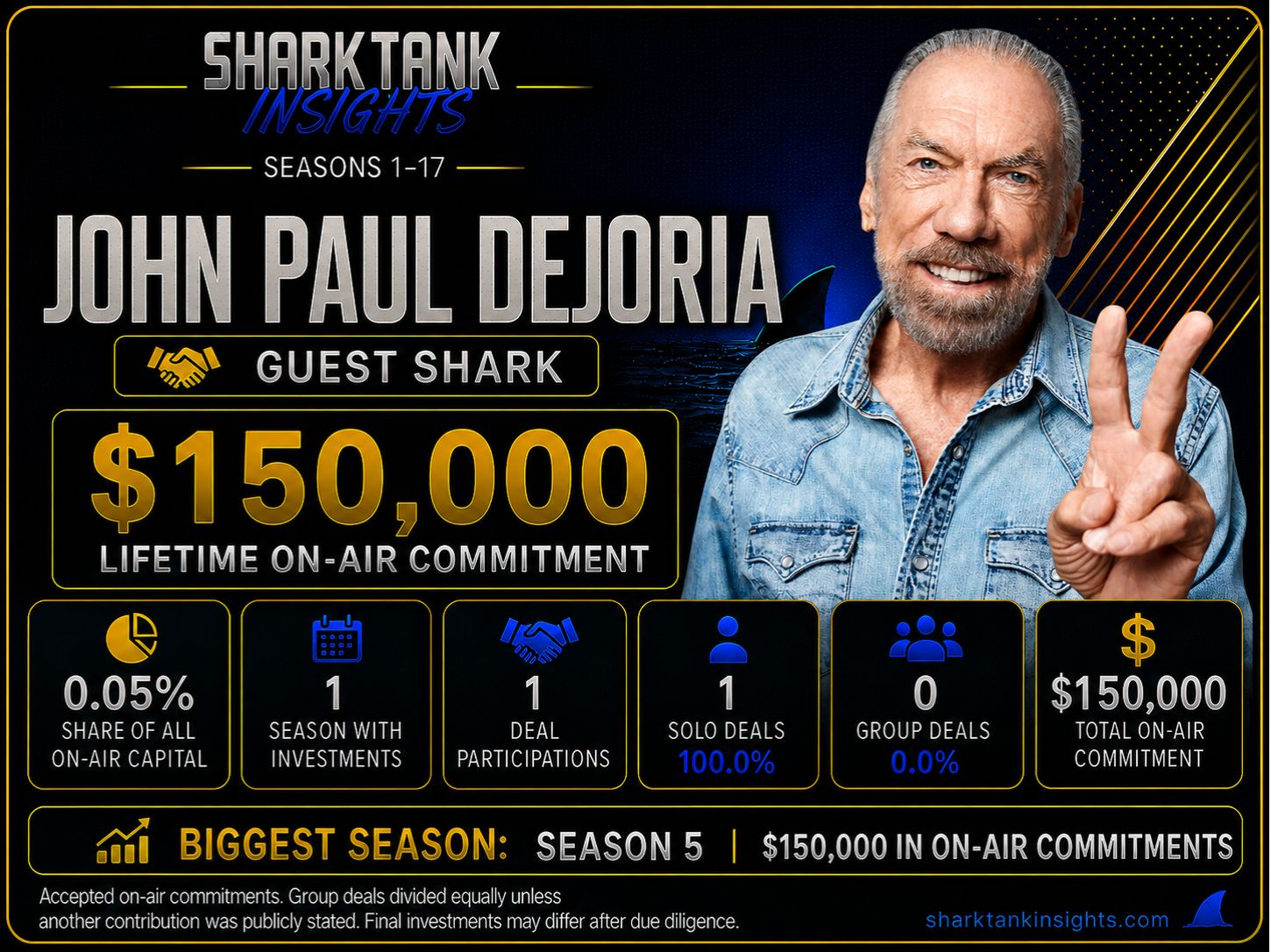
John Paul invested alone in the agricultural business founded by Johnny Georges. The complete agreement was worth $150,000 for 20% equity. Since John Paul made no other accepted investment, Tree-T-Pee represents his complete Shark Tank portfolio.
How Much Did John Paul DeJoria Invest on Shark Tank?
John Paul DeJoria invested $150,000 in one Shark Tank company. His only accepted deal came in Tree-T-Pee, so he finished the show with one solo investment and zero group deals. Every dollar attributed to John Paul came from the same company.
| Company | Accepted Deal | John Paul DeJoria’s Commitment |
|---|---|---|
| Tree-T-Pee | $150,000 for 20% equity | $150,000 |
| Total | $150,000 |
The complete Tree-T-Pee agreement involved $150,000. John Paul was the only Shark in the deal, so the complete amount belongs to his investment record. This makes his complete Shark Tank investment record very easy to understand.
John Paul did not return in later seasons to build a bigger Shark Tank portfolio. Tree-T-Pee remains the only business connected with an accepted investment from him. Therefore, John Paul DeJoria’s lifetime Shark Tank commitment remains $150,000.
John Paul DeJoria Invested $150,000 in Tree-T-Pee
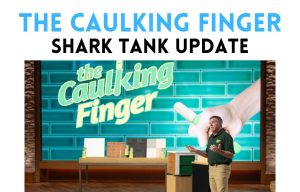
Johnny Georges entered Shark Tank with Tree-T-Pee, a cone-shaped agricultural product designed for young trees. The device directs water and nutrients toward the root system while also helping protect trees against frost. Johnny’s father, Rick Georges, originally developed the idea while working in the citrus industry.
The company was solving a simple problem. Farmers can use huge amounts of water around young trees, while Tree-T-Pee was designed to keep more of that water around the roots where it was actually needed. The product basically made another agricultural job more efficient.
Johnny had also sold more than 127,000 units before appearing on Shark Tank. However, another part of the business spoiled some of the fun. Tree-T-Pee cost approximately $2.95 to manufacture and sold for only $4.50, leaving a relatively small profit on every unit.
The margins made several Sharks uncomfortable. Kevin O’Leary believed the profit was too low, while Mark Cuban questioned why Johnny did not simply increase the price. Johnny explained that farmers often purchased thousands of units and keeping Tree-T-Pee affordable was important to him.
John Paul looked at the company differently from the other Sharks. He appreciated Johnny’s commitment to farmers and believed the entrepreneur was trying to do the right thing instead of extracting the highest possible profit. John Paul offered the complete $150,000 for 20% equity, and Johnny immediately accepted.
The agreement valued Tree-T-Pee at approximately $750,000. Johnny entered the Tank asking for $150,000 for 20%, and John Paul accepted those exact terms without demanding more ownership. The founder therefore got the money and valuation he wanted.
Why Tree-T-Pee Made Sense for John Paul DeJoria
John Paul DeJoria brought a different mindset to the Shark Tank panel. His entrepreneurial journey was never limited to making money because philanthropy, environmental protection and helping communities had already become important parts of his career. Therefore, John Paul could look at the entrepreneur, purpose and future possibilities along with the financial numbers.
His experience building major companies made him familiar with physical consumer products as well. John Paul had spent years dealing with manufacturing, branding, distribution and international expansion. More importantly, he understood how a simple product could become a recognizable business if customers understood why they needed it.
This was one reason Tree-T-Pee made sense for him. The company did not have complicated technology or a revolutionary business model. It had a simple agricultural product designed to reduce water use and make life easier for farmers.
John Paul also seemed attracted to entrepreneurs with purpose. His own career was not a straight road to success because he had experienced difficult beginnings before building Paul Mitchell and Patrón. Therefore, an entrepreneur willing to build a business without forgetting the customer could easily catch his attention.
Johnny Georges checked this box. He understood the economics of Tree-T-Pee but still wanted to keep the product affordable for farmers. The margins were small, but Johnny’s attitude made John Paul believe there was something more behind the company.
Did John Paul DeJoria’s Tree-T-Pee Deal Close?
There is strong public evidence suggesting that John Paul DeJoria continued his relationship with Tree-T-Pee after the episode. Later reporting described DeJoria as having invested $150,000 for 20% of the company, while Tree-T-Pee’s own history continued crediting Johnny Georges with landing the deal. The television agreement did not simply disappear after filming.
The relationship also continued beyond the original episode. John Paul reportedly helped Johnny develop business connections, improve distribution and reach additional markets. Tree-T-Pee remained active instead of disappearing after receiving the Shark Tank publicity.
In the case of Tree-T-Pee, the evidence looks much better than businesses where founders later confirmed negotiations collapsed. John Paul continued being described as an investor, while the company remained publicly connected with him. Considering this, the complete $150,000 has strong public support as actual funding.
The exact financial return is another story. Tree-T-Pee is privately owned, and the final ownership documents or distributions John Paul received have not been made public. Therefore, putting an exact profit number on his $150,000 investment would be nothing more than guesswork.
What Happened to Tree-T-Pee After Shark Tank?
Tree-T-Pee got the publicity every entrepreneur expects after appearing on Shark Tank. Johnny’s story and his commitment to keeping the product affordable gave people another reason to remember the company. However, the post-show journey did not end with temporary television attention.
The business continued operating and moved beyond the Florida agricultural market where Johnny originally built it. John Paul reportedly helped him develop business connections, improve distribution and reach additional markets. The relationship therefore became much more than the television handshake.
Tree-T-Pee also remained active long after Shark Tank. The official company website continued operating in 2026, while GSI Supply still presented Johnny Georges as the founder behind the product. Moreover, customers could continue finding information about purchasing and using Tree-T-Pee.
As of 2026, Tree-T-Pee was still around more than a decade after the episode. This is important because many early Shark Tank companies enjoyed the television boost and disappeared a few years later. Tree-T-Pee managed to survive beyond the hype.
John Paul DeJoria’s Average Shark Tank Investment
John Paul DeJoria averaged $150,000 per accepted Shark Tank deal. The calculation comes from dividing his $150,000 investment total by his one investment in Tree-T-Pee. Since there was only one deal, the median commitment is also $150,000.
His average also looks tiny compared with the amount of money involved in John Paul’s wider business career. Paul Mitchell and Patrón had already turned him into an extremely wealthy entrepreneur before he entered the Tank. Therefore, a $150,000 average Shark Tank commitment was not a massive cheque by his standards.
John Paul DeJoria’s Shark Tank Investment Style
One accepted investment is not enough to create a detailed Shark Tank investment pattern. You cannot look at one deal and confidently say John Paul always invests in a certain type of company. However, his professional background makes the Tree-T-Pee investment much easier to understand.
John Paul spent most of his career around consumer businesses, entrepreneurship, philanthropy and global brands. Tree-T-Pee itself combined several of these areas into one investment.
His wider activities support the same thing. Grow Appalachia, environmental conservation and other philanthropic projects gave John Paul years of experience around businesses and causes trying to accomplish something useful. Therefore, an agricultural company connected with water conservation was much closer to his interests than a business he knew nothing about.
Tree-T-Pee also showed that John Paul did not look exclusively at projected profits. Financial returns obviously mattered because an investment had to survive. However, Johnny’s commitment to farmers gave the company something beyond the immediate margin.
What John Paul DeJoria Brought to Shark Tank
John Paul brought something to Shark Tank that was easy to underestimate because most viewers knew him as the billionaire behind Paul Mitchell and Patrón. He understood consumer brands, distribution, entrepreneurship and how a tiny business could become much larger if customers actually wanted the product. His work outside the show had already taught him to look beyond what an idea was worth today.
John Paul Mitchell Systems became a major company despite beginning with approximately $700. John Paul and Paul Mitchell built the business while dealing with extremely limited resources during the early years. One small start eventually helped define a business career built around surviving difficult beginnings.
Patrón later became much larger. John Paul co-founded the tequila company in 1989, while Bacardi eventually acquired it in a transaction based on an enterprise value of approximately $5.1 billion. Shark Tank was only a small part of John Paul’s much bigger business career.
John Paul DeJoria Net Worth
John Paul DeJoria’s net worth is estimated at approximately $3.1 billion as of August 2026. His hair-care and tequila businesses created the foundation of the fortune. He had already become one of the wealthiest entrepreneurs to enter the Tank before making his $150,000 Tree-T-Pee investment.
The Shark Tank commitment looks tiny beside that number. John Paul had already built two major consumer brands before appearing on the program, so his only television investment represented a very small part of his complete financial life.
However, net-worth numbers should still be treated as estimates. John Paul owns interests in private companies and other investments where exact values can change. Therefore, the $3.1 billion figure is useful, but his complete personal financial position remains private.
How Successful Was John Paul DeJoria on Shark Tank?
John Paul DeJoria’s Shark Tank performance is difficult to rate because the sample size is tiny. He made only one accepted investment worth $150,000 and never returned enough to build a larger portfolio. Comparing this record with regular Sharks who watched hundreds of pitches would not make much sense.
The positive aspect is that Tree-T-Pee continued operating after appearing on the show. The company remained active more than a decade after the episode, while John Paul continued being publicly connected with the business. The investment also has much stronger closing evidence than television agreements that simply disappear after filming.
However, an operating company does not automatically mean John Paul earned millions. We do not have his final private ownership documents or information showing exactly how much cash he received from the investment. Therefore, calculating a return would be nothing more than an assumption.
From a company-status perspective, John Paul’s one-company portfolio has performed very well. Tree-T-Pee survived long after the business Johnny originally presented and remained active in 2026. For only one investment, John Paul could have done much worse.
Conclusion
John Paul DeJoria committed $150,000 during his time on Shark Tank. He appeared in Season 5 and made one accepted investment in Tree-T-Pee. The agricultural company became John Paul’s first and only Shark Tank deal.
The complete agreement involved John Paul investing $150,000 for 20% equity. There was no other Shark in the deal, so the complete amount belongs to his investment record. The agreement valued Tree-T-Pee at approximately $750,000.
John Paul made no group investments and did not return in later seasons to add more companies to his portfolio. Therefore, Tree-T-Pee represents 100% of John Paul DeJoria’s accepted Shark Tank investment record. Interestingly, the only business he selected remained active more than a decade later.
Tree-T-Pee continued operating and John Paul remained publicly connected with the company. Later reporting described him as having invested the same $150,000 for 20%, giving the agreement much stronger support than deals that disappear after filming. The company became a strong early Shark Tank story.
However, company progress and John Paul’s personal investment return are still two different things. The exact money he made from his $150,000 Tree-T-Pee investment remains private. One successful company is enough to make his short Shark Tank appearance interesting.

Hi. I’m Daniyal Durrani. A CA-finalist, CPA-UK, and Master in Economics, with a decade-long business studies experience. I work as an Audit and Business Advisory Manager in a globally recognized accounting firm. I have been watching Shark Tank for a long time and have always admired the innovative business ideas. The revolutionary solutions to unaddressed day-to-day problems presented on the show used to impress me like no other thing on TV. Read more About me.